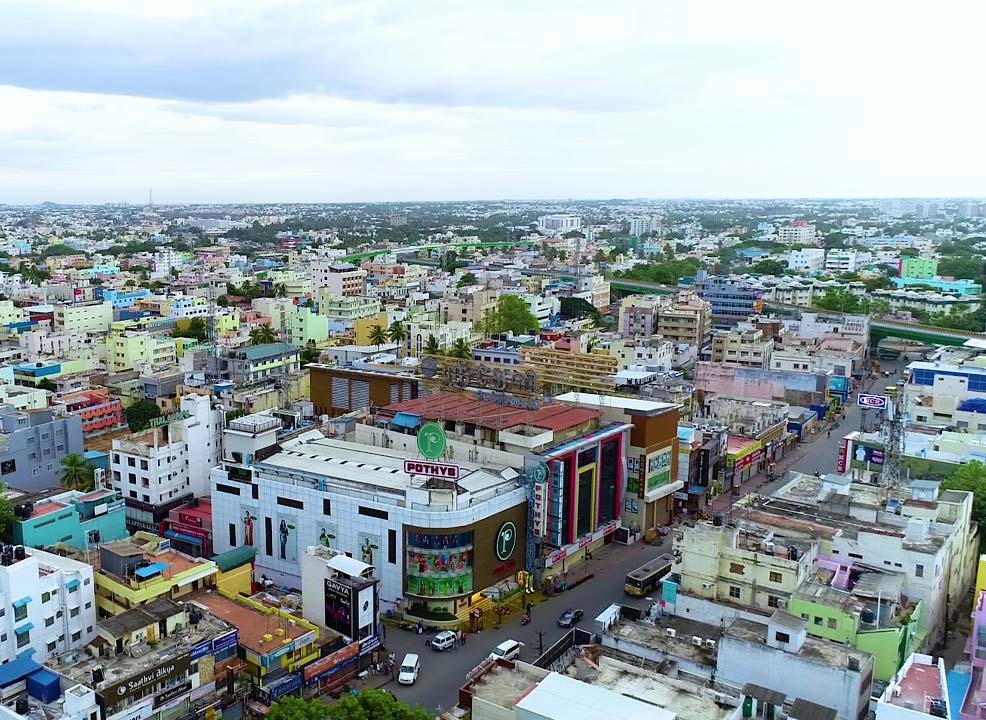
About Coimbatore

Coimbatore – A City of Heritage, Industry, and Progress

Ancient Origins

Coimbatore, popularly known as the “Manchester of South India,” is Tamil Nadu’s second-largest city and one of the country’s leading economic centers. Its history dates back to the Sangam era when the region formed part of Kongu Nadu and was inhabited by the indigenous Kosar tribe. According to local tradition, the city derives its name from “Kovanputhur,” a settlement established by a tribal chief named Kovan.

A Land of Great Kingdoms

Owing to its strategic location near the Palakkad Gap, Coimbatore became an important trade and cultural center connecting the western coast with the interior of South India. Over the centuries, it came under the rule of several renowned dynasties, including the Cheras, Cholas, Pandyas, Rashtrakutas, and Hoysalas. During the 15th century, it became part of the Vijayanagar Empire, followed by the Madurai Nayaks, who introduced an effective system of local administration.

From Mysore to British Administration

In the 18th century, Coimbatore came under the control of the Kingdom of Mysore, ruled by Hyder Ali and Tipu Sultan. Following the Anglo-Mysore Wars and the defeat of Tipu Sultan in 1799, the British East India Company annexed the region into the Madras Presidency. Coimbatore was established as the district headquarters in 1804 and later became a municipality in 1866, laying the foundation for modern civic governance.

Rise of the Textile Capital

The late 19th and early 20th centuries marked a turning point in Coimbatore’s history. Favorable conditions for cotton cultivation led to the establishment of major spinning and weaving mills. The growth of the textile industry, supported by hydroelectric power, transformed the city into a thriving industrial center and earned it the title of the “Manchester of South India.”

Modern Industrial and Educational Hub

Following India’s independence, Coimbatore expanded beyond textiles into engineering, automobile components, pumps and motors, and agricultural equipment manufacturing. In 1981, it was elevated to the status of a Municipal Corporation. Today, Coimbatore is recognized as a major hub for industry, education, entrepreneurship, and information technology, successfully blending its rich historical heritage with modern development.

Coimbatore Today

With its strong industrial base, renowned educational institutions, pleasant climate, and vibrant cultural heritage, Coimbatore stands as one of South India’s most progressive and livable cities. It continues to play a significant role in the economic growth and development of Tamil Nadu and India.